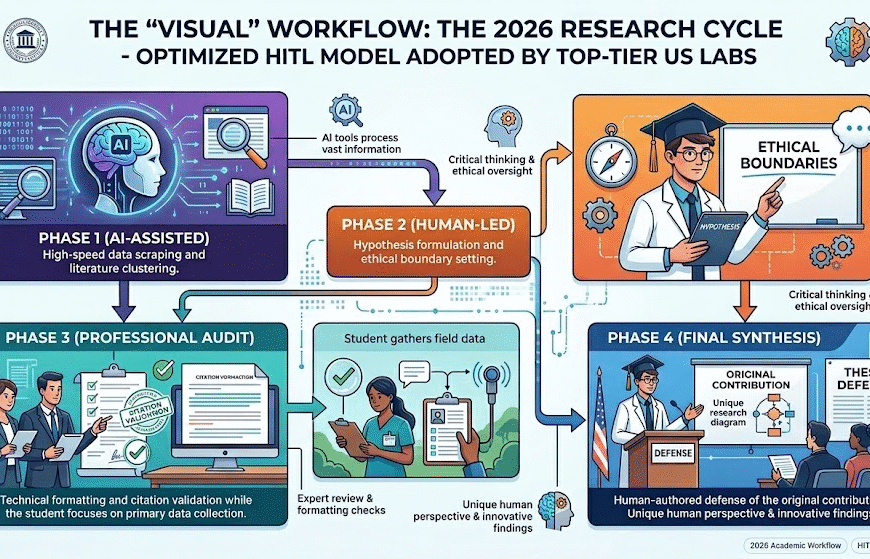
The Secure Digital Network 986198840 for Efficiency presents a governance-driven perimeter with verifiable identities and encrypted channels. Its layered security is designed to streamline operations while maintaining auditable policy compliance. Real-time threat detection integrates with incident playbooks to enable swift containment. Interoperability and scalable routing support diverse ecosystems, promising reliability and fault tolerance. The framework invites scrutiny on how governance metrics align with data governance and how rapid containment can be sustained as environments evolve.
What Secure Digital Network 986198840 Is and Why It Delivers Efficiency
A secure digital network (SDN) designated as 986198840 refers to an architecture that emphasizes controlled access, integrity, and resilience within a defined enterprise perimeter. It analyzes governance implications, ensuring risk-aware decision-making and measurable compliance. Core features include secure authentication and encrypted channels, enabling verifiable identities and confidential communication while maintaining operational freedom through auditable, policy-driven access controls and resilience planning.
Streamlined Architecture: Layered Security That Speeds Up Operations
The streamlined architecture of SDN 986198840 integrates layered security to accelerate operations while preserving governance rigor. It structures defense around modular controls, ensuring data governance alignment and policy consistency.
Operational tempo benefits from predefined incident response playbooks, rapid containment, and clear escalation paths. This approach balances speed with accountability, enabling autonomous execution without compromising risk management or auditability.
Real-Time Threat Detection for Uninterrupted Performance
Real-Time Threat Detection enables continuous service delivery by monitoring network activity and asset health at micro-second intervals.
The analysis emphasizes real time analytics, enabling immediate anomaly detection and informed decision making.
Threat modeling is integrated with layered security to identify potential vectors and enforce preventive controls.
Throughput optimization and governance considerations ensure compliant, autonomous responses without service disruption.
Interoperability and Scalable Routing for Complex Ecosystems
Interoperability and scalable routing are essential for complex ecosystems where heterogeneous components must communicate reliably at scale. The analysis emphasizes governance-driven standards, verifiable interfaces, and auditable pathways to prevent fragmentation. Secure interoperability enables trusted exchanges, while scalable routing accommodates growth and fault tolerance.
Observers should favor transparent protocols, modular governance, and performance metrics that balance autonomy with coordinated security and interoperability objectives.
Conclusion
The Secure Digital Network 986198840 exemplifies governance-driven efficiency, weaving layered security with auditable processes that accelerate operations. Its architecture, like a well-tuned orchestra, aligns identity, encryption, and policy with measurable metrics, ensuring resilience without stifling autonomy. Through real-time threat detection and interoperable routing, the system mirrors a disciplined commons, where compliance and data governance tradeoffs are transparent. In this landscape, performance and protection allude to a future where controlled agility sustains trustworthy, scalable digital services.